
October 2026 Issue
The Fine Print, the Audit, and the Old Ceiling
October is when a lot of you start thinking about renewals and year-end paperwork, so this issue stays practical. The lead piece covers the clauses in your customer contract that decide how big a claim gets before your insurance is ever involved. Then we'll get your workers' comp audit file ready, look at what's hiding above the ceiling tiles in older buildings, and catch up on what the 2026 NEC means for low voltage work.
Topic 1: Contract Risk Transfer
Your Customer Contract Decides the Size of the Claim
When an alarm doesn't report, a camera misses the break-in, or an access control system lets the wrong person through, the first document anyone reads isn't your insurance policy. It's your contract. More and more often, the person reading it works for your customer's property insurer, looking to recover what it paid through subrogation.
Alarm and security contracts have carried protective language for decades because a monitoring fee can't fund a guarantee against burglary or fire. Those clauses still do real work today, but only if they're drafted, presented, and signed the right way.
The clauses that do the heavy lifting
- Exculpatory or "no guarantee" clause. States that you aren't an insurer and that the customer relies on its own insurance for losses.
- Limitation of liability. Caps what you owe at a stated amount. Courts in South Carolina and New Jersey, for example, have enforced caps of $500 and $1,000 in alarm contracts.
- Waiver of subrogation. Blocks the customer's insurer from coming after you once it pays the customer's claim.
- Indemnity. Decides who defends and pays whom when a third party sues.
None of this is automatic. Courts have refused to enforce limitation clauses printed on the back of a contract or buried in small type next to unrelated language, and these protections generally don't extend to gross negligence or willful misconduct. Clear headings, plain wording, and a signature near the clause all matter.
Your contract decides how big the claim is before your insurance policy ever gets a vote.
Now flip it around
On commercial projects, you're often the one signing someone else's paper, and GC and owner subcontracts routinely ask you to defend and indemnify them. Your general liability policy can cover liability you take on in a contract, but only when the agreement fits the policy's definition of an "insured contract," only for covered bodily injury or property damage, and only up to your limits. If the indemnity clause turns out to be unenforceable, that contractual liability coverage doesn't respond at all.
State law shapes what's enforceable too. Florida, for example, voids certain construction contract indemnity provisions unless the contract includes a monetary limit that bears a reasonable commercial relationship to the contract. Other states have their own anti-indemnity rules.
What I'd do this month
- Pull your standard agreement. Confirm it has the clauses above under clear headings, and that it's the version every customer actually signs, including service and add-on work orders.
- Read the indemnity before you sign. On every GC or owner subcontract, flag language that requires you to defend the other party or cover their negligence.
- Match the contract to the policy. Ask whether your GL policy has an endorsement that narrows the insured contract definition, and whether your limits fit what the contract promises.
- Keep your attorney involved. Contract drafting belongs with counsel. My role is showing you how the language lines up with your insurance.
Topic 2: Workers' Compensation
Your Workers' Comp Audit Starts Before the Auditor Calls
Your workers' comp premium starts with an estimate of payroll. After the policy expires, the carrier audits what you actually paid. If payroll came in higher than the estimate, you get an additional premium bill. If it came in lower, you get money back. For a growing shop that added technicians or ran heavy overtime this year, that bill can land at exactly the wrong time.
Where audits go sideways
- Subs without proof of coverage. If you can't show that a subcontractor carried workers' comp, the auditor can add that sub's payroll to your premium basis. With no payroll records available, the full subcontract price can be counted.
- Vague job descriptions. Auditors ask for a description of your operations and the duties of each employee and contract worker. Every payroll dollar gets assigned to a class code, so clear descriptions help each person land in the right one.
- Owners and officers. Covered owners and officers are included in the premium base. Leaving them out requires an exclusion endorsement on the policy.
- Overtime lumped together. Keep gross overtime separated by employee, and ask your agent how your state treats the overtime portion of pay.
Build the audit file now
Carriers generally want one source document and one verification document. Travelers, for example, asks for a payroll report that matches the policy period within about 30 days, verified with quarterly 941s, W-2/W-3 filings, or state unemployment wage reports, plus certificates of insurance for subcontracted labor.
- Check the estimate. Compare year-to-date payroll with the estimate on your policy. If it's well off, ask your agent about updating it before the audit.
- Collect sub certificates. Get a current certificate from every sub you used this year, and make it a rule that no sub starts without one.
- Describe the work. Write a one-line duty description for each employee and contract worker.
- Stage the records. Have payroll reports and tax filings ready to hand over.
Topic 3: Pollution Exposure
The Cable Is New. The Building Isn't.
Picture a routine camera and access control retrofit in an office building from the 1970s. A technician lifts a ceiling tile and drills a pathway through sprayed-on fireproofing. A few weeks later, the building manager asks whether anyone tested that material first. That's how a simple install turns into a pollution claim.
Under OSHA's asbestos standard for construction, thermal system insulation and surfacing material in buildings constructed no later than 1980 is presumed to contain asbestos unless testing shows otherwise. Building owners must identify the presence, location, and quantity of that material and notify contractors before work begins. In practice, that information doesn't always reach the technician holding the drill.
Why your GL may not respond
Most general liability policies carry a pollution exclusion. The standard version includes limited exceptions for contractors, but many policies add a total pollution exclusion that removes them, and some carry a specific asbestos exclusion. Contractors pollution liability (CPL) is built to fill that gap. Depending on the form, it can respond to both sudden and gradual pollution events and can include completed operations. Wording varies a lot by carrier, so the details matter.
- Ask before you open anything. In pre-1981 buildings, request the owner's asbestos survey or ACM and PACM information before cutting, drilling, or disturbing ceilings and walls.
- Give crews a stop rule. If material looks suspect, stop, photograph it, and call the office.
- Document conditions. Pre-job photos of ceilings and pathways help if questions come up later.
- Read your exclusions. Check your GL for a total pollution or asbestos exclusion, and price CPL if retrofit work is a regular part of your business.
Around the Trade
The 2026 NEC Moved Your Articles. Your Jurisdiction May Not Have Moved Yet.
For more than 80 years, Chapter 8 of the National Electrical Code stood on its own. The rules in Chapters 1 through 7 didn't apply to communications systems unless Chapter 8 specifically referenced them. The 2026 edition ends that independence.
- Chapter 8 now covers outside and entering. It has been retitled to focus on communications systems outside and entering buildings.
- Inside work moved to Chapter 7. Most communications wiring inside buildings now lives in Chapter 7, with general limited-energy wiring requirements in Article 720.
- Articles consolidated. Articles 770, 805, and 840 were deleted, and Articles 720 through 750 now hold nearly all limited-energy requirements.
Industry groups expect day-to-day installation work to be simplified rather than overhauled, but the article numbers on your submittals, checklists, and training materials will change. And because Chapters 1 through 7 now reach communications equipment, equipment locations deserve a closer look once your jurisdiction adopts the new edition.
A note for Florida contractors
Florida's 9th Edition (2026) codes take effect December 31, 2026, and they adopt the 2023 NEC, not the 2026 edition. Florida jobs move to the 2023 NEC at year-end, while the 2026 reorganization matters now for work in jurisdictions that have adopted it.
Tool Spotlight
Brother P-touch EDGE PT-E310BTVP
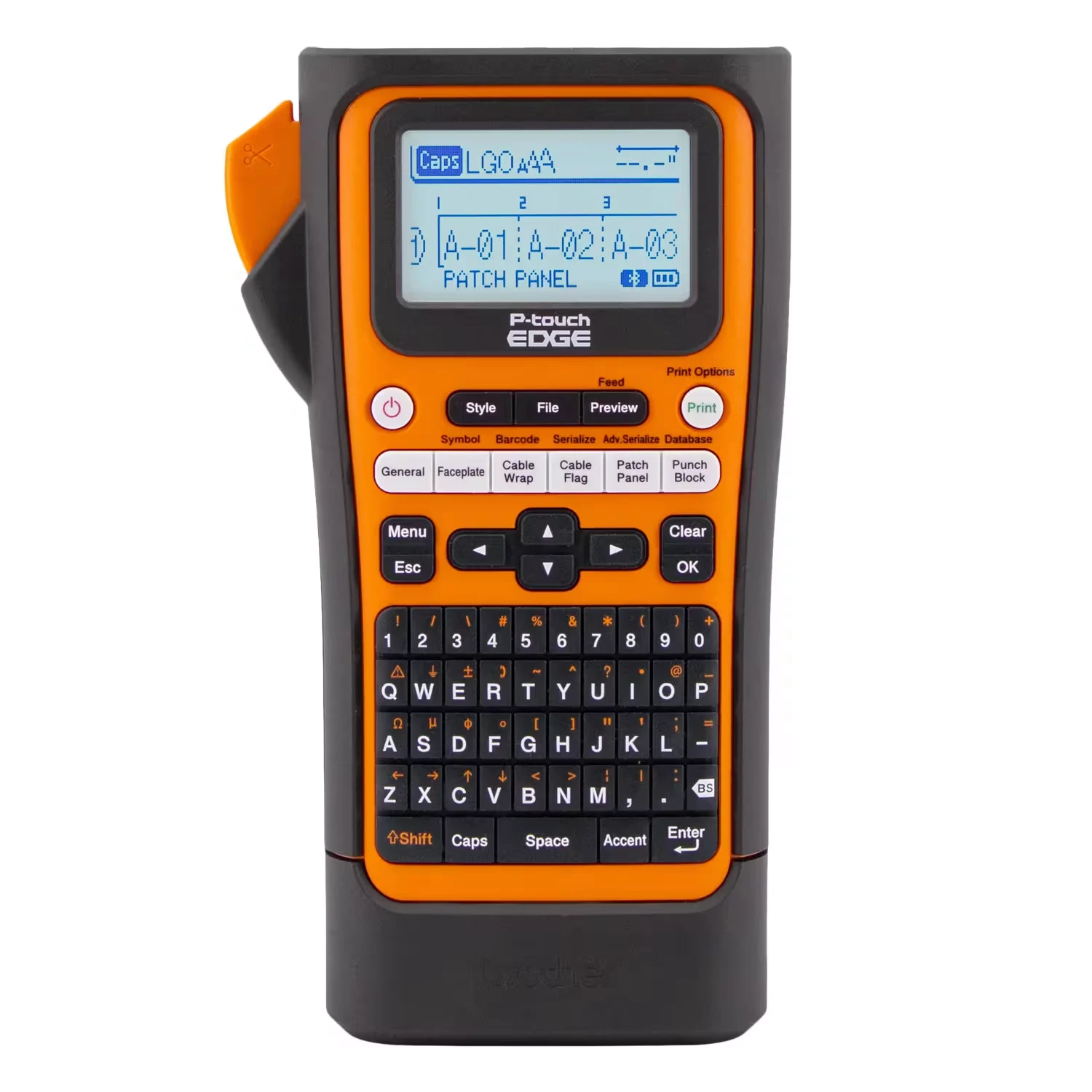
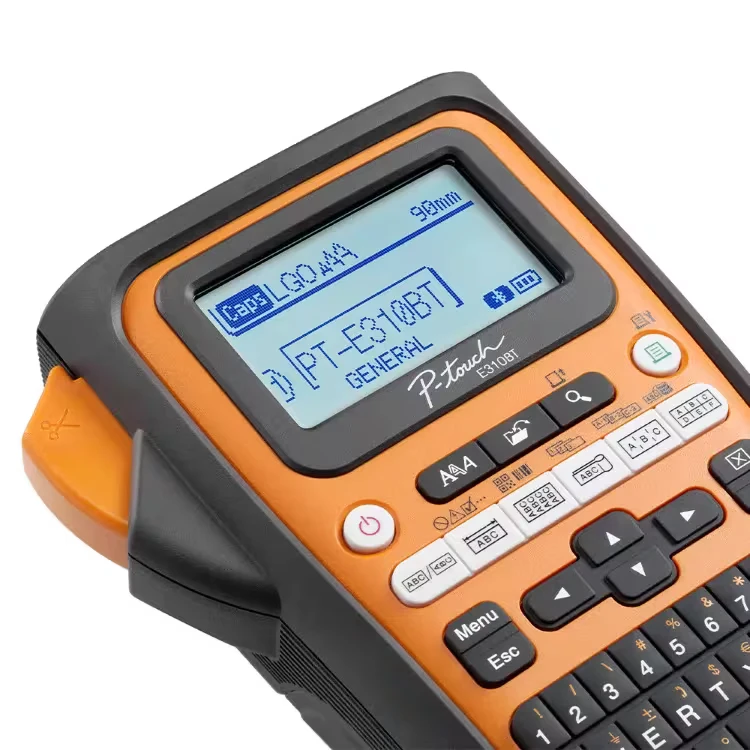
A handheld industrial label printer with one-touch application keys for cable wraps, cable flags, patch panels, punch blocks, and faceplates. It prints laminated labels and heat shrink tubes up to 18mm, adds QR codes and barcodes, stores up to 99 templates plus label databases, and works with Brother's Pro Label Tool app over Bluetooth or connects by USB-C.
Labels outlast the install. A consistent naming convention, printed the same way by every crew, makes the next service call faster and leaves a clear record of what you installed and where. If a question comes up years after closeout, documented work is easier to stand behind.
No affiliation. We just thought it was useful.
Quick Hits
- Fall back, check the clocks. Daylight saving time ends Sunday, November 1 at 2 a.m. Check recorder timestamps and access control schedules before Monday's calls.
- Thanksgiving isn't a normal Thursday. Confirm each customer's approved holiday door schedule for November 26 instead of letting the weekday unlock routine run.
- NICET paperwork. Recertification requires at least 90 CPD points per certification over the three-year period. Review the CPD rules
- ISC East is next week. November 3 through 5 at the Javits Center in New York, with the exhibit hall open November 4 and 5. Event details
Send Me Two Documents. I'll Send Back a Written Comparison.
If this issue made you wonder what your contracts actually promise, here's an easy way to find out without starting a sales process.
What to send
- Your current certificate of insurance
- Your standard customer agreement, or a recent GC subcontract you signed
I'll review how the risk-transfer and insurance sections line up with your current coverage and send you a short written comparison, including anything worth a conversation with your attorney.
Nothing goes to a carrier and no quotes happen unless you review what I find and decide you want to go further.
Book a quick callOr reply to this month's email with the documents attached.
From the Resource Library
- Cyber Insurance for Low-Voltage Contractors: Where Tech E&O and Cyber Liability Overlap
How customer networks, remote access, and connected systems create overlapping exposures.
- Certificates of Insurance and Contract Requirements
What GCs and commercial customers are really asking for when they require a COI and specific endorsements.
- Installation Floater vs. Tools and Equipment
Where project materials may be covered in transit, staged on site, and awaiting acceptance.
- General Liability vs. E&O: What Actually Covers a Failed Low-Voltage System
How GL and technology E&O respond to failed alarm, CCTV, access control, and cabling work.

Who You'll Work With
I lead the coverage review and the strategy. My two account managers handle day-to-day service, from certificates to endorsements, so your questions get answered quickly.

Jeff Giacobello, CLCS
Commercial P&C Producer, Insurance Office of America
Technology & Life Sciences Practice | Tampa, Florida
Cell 727-667-0042Office 813-262-2311
Book an intro callSources for this issue: Contract clauses: SDM Magazine "Security & the Law" coverage of alarm contract limitation of liability and exculpatory clause decisions in Georgia and New Jersey; the U.S. District Court for South Carolina decision in Bahringer v. ADT Security Services (2013); White and Williams, The Subrogation Strategist, on waiver of subrogation and exculpatory provisions in security contracts; IRMI, "In Defense of Insured Contracts"; Higginbotham on contractual liability and the CGL; Section 725.06, Florida Statutes. Workers' compensation: Travelers Premium Audit required documents; LUBA Workers' Comp premium audit guidance on subcontractors, owners and officers, and overtime records. Pollution: OSHA Asbestos Standard for Construction, 29 CFR 1926.1101; Insurance Journal Academy Journal, "Filling the Gap in Contractors Professional and Pollution Liability"; ConstructionRisk.com on court decisions applying the pollution exclusion; Chubb Contractors Pollution Liability coverage highlights. NEC: Electrical Contractor Magazine, "Ins and Outs: Chapters 7 and 8 in the 2026 NEC"; Independent Electrical Contractors, 2026 NEC global code-wide changes; CCCA, "The 2026 NEC Is Approved"; Florida Building Commission 9th Edition (2026) workplan; ICC NTA, "Florida Adopts New Building Codes." Tool Spotlight: Brother USA product page for the P-touch EDGE PT-E310BTVP. Quick Hits: ABC News and Time Out on the November 1, 2026 end of daylight saving time; NICET CPD points FAQ; Security Industry Association and ASIS NYC event pages for ISC East 2026.
The Low Voltage Briefing is general information for low voltage contractors. It is not legal advice, a coverage opinion, or a quote. Coverage depends on the actual policy language, carrier underwriting, and applicable law. Please review contract language with your attorney.
Get The Low Voltage Briefing by email
One short issue a month on insurance, risk, and the trade. No spam, and you can unsubscribe any time.
Ready for a coverage review?
Tell us about your operation and our team will come back with a structured review of your program.