
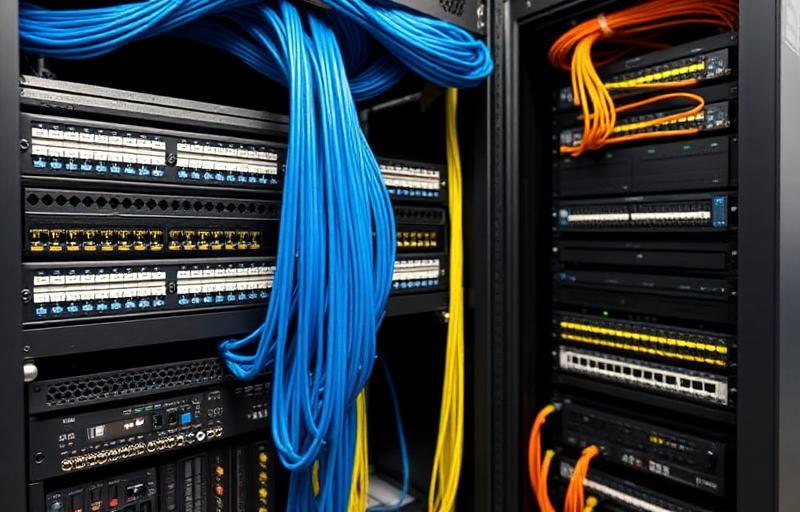
Who we cover: Structured cabling
Insurance for structured cabling contractors.
Copper, fiber, pathways, and in-building networks. Cabling disappears into walls and ceilings once it's done, until a network goes down, a ceiling comes down, or a certification report gets questioned. Then your work is the first thing everyone looks at.
Where structured cabling risk actually sits.
Cabling looks like the simplest low-voltage trade. The claims come from everything else in the building you work around.
Damage to existing building systems
Drilling, pulling, and working above ceilings puts crews next to sprinkler lines, HVAC, and live electrical. A punctured pipe or a cut line can turn a cabling job into a large property damage claim.
Network downtime
A mislabeled patch, a bad termination, or work in a live data closet can take a customer's network down. When the claim is lost business rather than physical damage, GL may not respond, and it becomes an E&O question.
Testing and certification
Manufacturer warranties depend on certification reports that show each link passed. If links fail later and the reports don't hold up, you can end up paying for rework across the whole job.
Payroll classification
How cabling crews are classified for workers' comp varies by state, and it can depend on whether the work is in-building, outside plant, or closer to electrical. Payroll in the wrong class is a common audit surprise.
What a claim looks like.
Illustrative example
A contractor is pulling new Cat 6A cable above the ceiling of an occupied office floor. A tech drills through a joist and nicks a sprinkler line. Water runs for 20 minutes before anyone finds the shutoff, soaking two floors of offices, furniture, and the tenant's equipment.
The building owner and two tenants file claims against the contractor. The GL policy responds to the property damage, but the tenant also claims weeks of lost business while its network was rebuilt, and the contract the contractor signed carried an indemnity clause broader than its policy backs.
Coverage built around structured cabling work.
- General liability
- Property damage to the buildings you work in, including water and fire damage from work above ceilings and in walls.
- Umbrella
- Damage to occupied commercial buildings and data spaces can run past primary limits. Larger GCs and owners often require it.
- Professional liability / E&O
- Responds to claims that design, labeling, termination, or testing errors caused downtime or rework. Network design and certification should be named.
- Workers' compensation
- Classification depends on your state and the work your crews do. We check payroll against the classes it's rated under.
- Tools, equipment, and installation floater
- Testers, splicers, reels of cable, and materials on site or in transit until the owner accepts the job.
- Commercial auto
- Service vans and trailers, plus hired and non-owned auto for techs who drive their own vehicles.
- Cyber
- Work in network closets and on customer networks, including claims from customers.
Contract language we read on cabling jobs.
- Indemnification. Broad-form language can make you responsible for damage you didn't cause. We check whether your insurance actually backs what you promised.
- Testing and acceptance. What certification you deliver, against which standard, and when the owner accepts the work.
- Warranty terms. Who carries the manufacturer warranty, and what you promise on top of it.
- Consequential damages. Whether lost business and downtime are excluded, or left open.
- Insurance requirements. GL and umbrella limits, additional insured status, waiver of subrogation, and primary and noncontributory wording, checked against your actual policies.
Questions contractors ask
Physical damage to the building, like a cut pipe or a damaged ceiling, is usually GL territory. Watch for exclusions on your own work and for limits too low for the buildings you work in.
Often, yes. When the claim is that a network went down or a link failed because of design, labeling, or testing errors, there's often no physical damage for GL to respond to. E&O is built for that.
You may have to rework links at your own cost, and the manufacturer warranty may be in question. Clean certification reports and a clear acceptance clause in your contract are the best protection.
It depends on the state and the work. In-building low-voltage, outside plant, and electrical work can fall into different classes. We check how your payroll is rated against what your crews actually do.
Related reading
 Coverage and claims
General Liability vs. E&O: What Actually Covers a Failed Low-Voltage System
How general liability and technology E&O respond to failed alarm, CCTV, access control, and cabling work, and where coverage gaps hide.
8 minutes readRead article Contracts and compliance
Certificates of Insurance and Contract Requirements: What Low-Voltage Contractors Need Before the Job Starts
What GCs and commercial customers are really asking for when they require a COI, additional insured status, specific endorsements, higher limits, E&O, cyber, and umbrella coverage.
10 minutes readRead article Coverage and claims
Installation Floater vs. Tools and Equipment: What Covers Materials Before They're Installed?
Where cameras, panels, cable, and other project materials may be covered while in transit, staged at a job site, and awaiting final acceptance.
9 minutes readRead article
Find out where your cabling program stands.
Book a Risk and Coverage Review. You'll get a one-page findings summary marking each item fits, thin, or gap, with what it takes to fix.