
Who we cover: AV integration
Insurance for AV integration contractors.
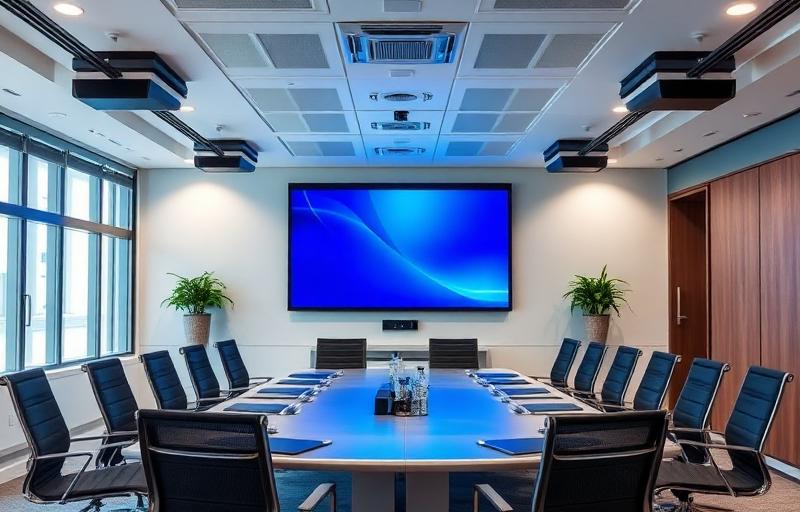
Conference rooms, digital signage, paging, distributed audio, control systems. AV jobs carry expensive gear, overhead mounting, and customers who expect it all to just work. When something falls, breaks, or doesn't perform, the claim lands on the integrator.
Where AV integration risk actually sits.
AV looks like a clean, indoor trade. The risk sits in what you hang, what you store, and what you promise it will do.
Mounted equipment
Displays, projectors, speakers, and arrays hang over people. A mount that fails, or a ceiling that can't hold the load, can cause serious injury and property damage long after the job is done.
High-value gear before acceptance
Displays, processors, and control systems often sit on site for weeks before the owner accepts the job. Theft and damage in that window usually fall on you, and standard tools coverage isn't built for it.
Systems that don't perform
A boardroom that can't run a video call, or a paging system that can't be heard in an emergency. When the complaint is design or programming, it's a professional liability claim, and GL often won't respond.
Networked control and remote support
Control processors, conferencing platforms, and remote management tools sit on customer networks with your logins. A breach that starts there becomes your claim.
What a claim looks like.
Illustrative example
A contractor installs a large video wall and ceiling-hung speakers in a corporate lobby. The displays and processors arrive three weeks before the owner is ready to accept the space. One weekend, the site is broken into, and much of the uninstalled gear is stolen.
The contractor's tools policy covers owned tools but not customer equipment waiting to be installed. Under the contract, the risk stays with the contractor until acceptance, so the replacement cost comes out of the business.
Coverage built around AV integration work.
- Installation floater
- Displays, processors, and gear on site, in storage, or in transit until the owner accepts the job. Often the biggest exposure on an AV job.
- General liability
- Injuries and property damage from mounted equipment, including after the job is complete. We check completed operations coverage closely.
- Professional liability / E&O
- Responds to claims that a system was designed or programmed to underperform. Design, programming, and remote support should be named.
- Umbrella
- A falling display or speaker can cause serious injury. Corporate, education, and public customers often require higher limits.
- Cyber
- Control systems, conferencing platforms, and remote access on customer networks, including claims from customers.
- Workers' compensation
- Classification varies by state and by how much of your work is low-voltage versus electrical. Ladder and lift work makes safety programs matter.
- Commercial auto
- Service vans and trailers, plus hired and non-owned auto for techs who drive their own vehicles.
Contract language we read on AV jobs.
- Risk of loss and acceptance. When the gear becomes the owner's responsibility: at delivery, at partial acceptance, or only at final sign-off.
- Structural and mounting responsibility. Who confirms the wall or ceiling can carry the load, and who signs off on mounting.
- Performance promises. What the system is promised to do, and whether the scope says what's outside your control, like the customer's network.
- Indemnification. Broad-form language can make you responsible for losses you didn't cause. We check whether your insurance actually backs what you promised.
- Insurance requirements. GL and umbrella limits, additional insured status, waiver of subrogation, and primary and noncontributory wording, checked against your actual policies.
Questions contractors ask
Usually not. Tools coverage is built for equipment you own and use. Customer gear waiting to be installed needs an installation floater, sized for what's on site at once.
You can be. Completed operations coverage under your GL is what responds, so we check that it's in place and that your limits fit the buildings and crowds you work around.
If you design or program systems, yes. A claim that a system doesn't perform as promised is usually professional liability, and GL often won't respond to it.
If your systems sit on customer networks or you support them remotely, it's worth having. A breach that starts with a control processor or your remote access can lead to claims from the customer.
Related reading
 Coverage and claims
Installation Floater vs. Tools and Equipment: What Covers Materials Before They're Installed?
Where cameras, panels, cable, and other project materials may be covered while in transit, staged at a job site, and awaiting final acceptance.
9 minutes readRead article Coverage and claims
General Liability vs. E&O: What Actually Covers a Failed Low-Voltage System
How general liability and technology E&O respond to failed alarm, CCTV, access control, and cabling work, and where coverage gaps hide.
8 minutes readRead article Coverage and claims
Cyber Insurance for Low-Voltage Contractors: Where Tech E&O and Cyber Liability Overlap
How customer networks, remote access, and connected systems create overlapping technology E&O and cyber exposures for low-voltage contractors.
7 minutes readRead article
Find out where your AV program stands.
Book a Risk and Coverage Review. You'll get a one-page findings summary marking each item fits, thin, or gap, with what it takes to fix.